Capture the required bandwidth
Select sufficient analog bandwidth and sample rate for the signal rise time, pulse shape, harmonics and modulation that must be observed.
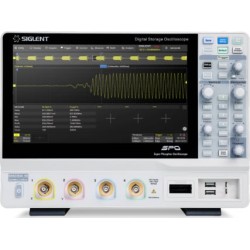
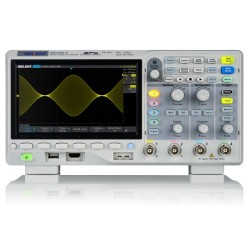
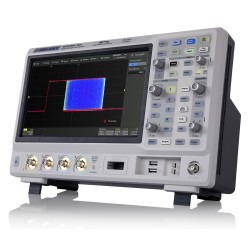
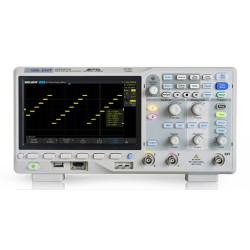
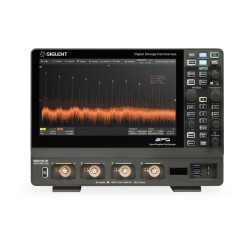
Siglent oscilloscopes provide bandwidth, sampling speed, memory depth and analysis tools for electronics design, power conversion, embedded systems, automotive networks, education and automated validation. Choose from economical two-channel instruments, four-channel mixed-signal models and high-resolution 12-bit HD platforms.
Bandwidth, sample rate, channels, memory, vertical resolution and probes all affect whether the instrument can display the event clearly and measure it accurately.
Select sufficient analog bandwidth and sample rate for the signal rise time, pulse shape, harmonics and modulation that must be observed.
Twelve-bit HD oscilloscopes provide finer vertical resolution than conventional eight-bit instruments, helping reveal low-level ripple, noise and small changes on larger waveforms.
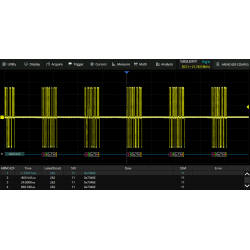
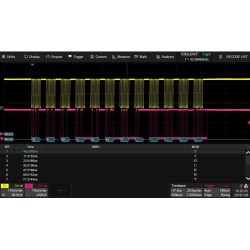
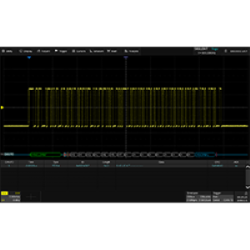
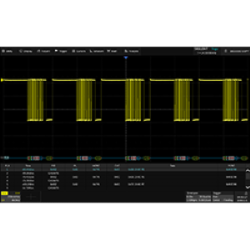
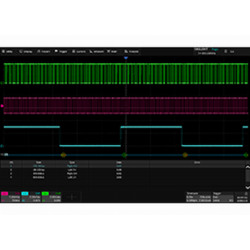
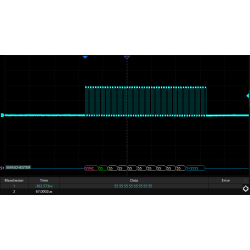
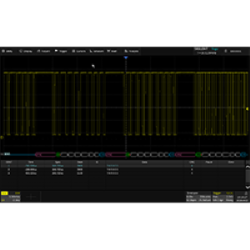
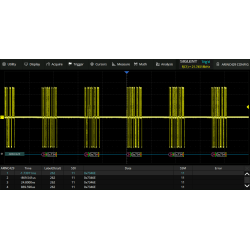
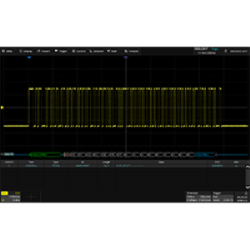
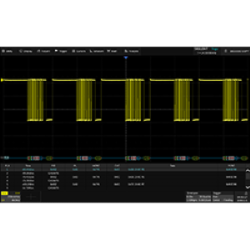
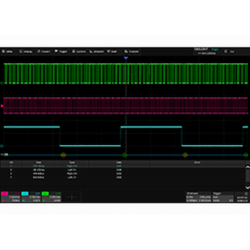
Mixed-signal and serial-decode options help engineers compare analog power, sensor or communication signals with digital timing and protocol activity.
The RCC category includes value-oriented bench scopes, 12-bit high-resolution models, mainstream mixed-signal platforms and higher-bandwidth instruments for advanced engineering.
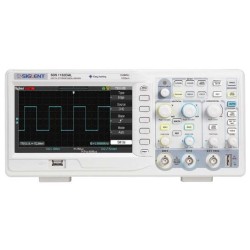
Entry-level digital storage oscilloscopes for education, service, maintenance and general electronics troubleshooting.
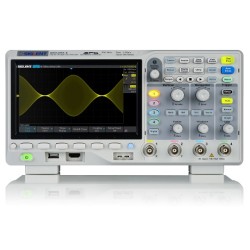
General-purpose two- and four-channel oscilloscopes for development, troubleshooting, education and embedded-system work.
Lower-cost four-channel Siglent oscilloscope platform for everyday signal viewing and bench troubleshooting.
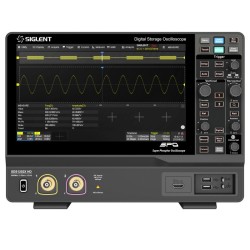
High-resolution oscilloscopes for power-electronics, sensor, audio, ripple and low-noise measurements.
Four-channel high-resolution scopes for embedded, power, automotive and mixed-signal engineering applications.
Four-channel high-performance 12-bit oscilloscopes for high-speed embedded, power, automotive and communication work.
Flexible oscilloscopes for embedded-system debugging, serial-bus analysis and general engineering.
High-channel-count 12-bit oscilloscopes for complex power, control, embedded and electromechanical systems.
Low-profile eight-channel 12-bit oscilloscopes for rack, laboratory automation and systems requiring multiple inputs.
Siglent scopes support education, electronics development, industrial troubleshooting, power electronics, automotive, communications and automated validation.
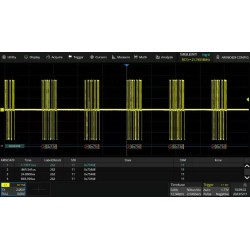
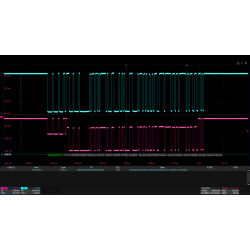
Correlate analog power, clock and sensor signals with digital buses such as UART, SPI, I²C, CAN or LIN using supported options.
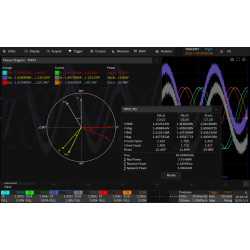
Measure switching waveforms, gate drive, ripple, inrush, harmonics and switching losses using suitable probes and analysis options.
Observe inverter outputs, control timing, current feedback, encoder signals and switching behaviour across multiple channels.
Analyze sensors, actuators, ignition, CAN, CAN FD, LIN, FlexRay and other supported vehicle communication signals.
View amplitude, frequency, timing, phase and transient behaviour when teaching electronics or troubleshooting equipment.
Use six- or eight-channel models to compare multiple phases, control signals, sensors and power rails at the same time.
Use this table as a starting point. Exact specifications vary by model and should be confirmed before ordering.
| Series | RCC-listed bandwidth range | Typical channels | Resolution | Best fit |
|---|---|---|---|---|
| SDS1000DL+ / CML+ | 50–100 MHz | 2 | Conventional DSO | Education, service and basic electronics |
| SDS1000X-E / X-U | 100–200 MHz | 2 or 4 | 8-bit class | General bench and embedded-system work |
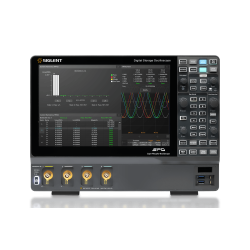
| SDS1000X HD | 100–200 MHz | 2 or 4 | 12 bit | Low-noise, ripple, sensor and power measurements |
| SDS2000X-E / Plus | 100–350 MHz | 2 or 4 | 8-bit class | Embedded, serial-bus and mainstream engineering |
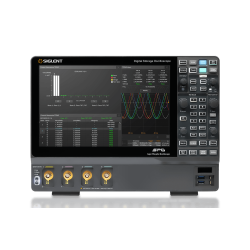
| SDS2000X HD | 200–350 MHz | 4 | 12 bit | Power electronics and higher-resolution debugging |
| SDS3000X HD | 350 MHz–1 GHz | 4 | 12 bit | High-speed embedded and advanced power analysis |
| SDS5000X HD | 350 MHz–1 GHz | 4, 6 or 8 | 12 bit | Complex multi-channel engineering systems |
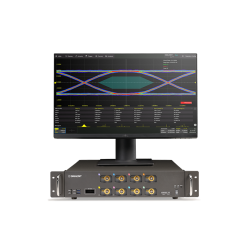
| SDS5000L | 350–500 MHz | 8 | 12 bit | Rack, automation and high-channel-count acquisition |
A suitable oscilloscope must be selected together with the correct voltage, current, differential or logic probes.
Select enough bandwidth for the highest meaningful signal frequency and rise time. Fast digital edges often require more bandwidth than the clock frequency alone suggests.
Choose two channels for basic comparisons, four for most embedded and power work, or six to eight channels for multi-phase and control-system measurements.
Select a 12-bit HD scope when small ripple, noise or waveform details must be measured in the presence of a larger signal.
Deeper memory allows longer time windows to be recorded while maintaining a useful sample rate for intermittent or complex events.
Confirm whether serial decode, mixed-signal inputs, Bode Plot, power analysis, jitter or compliance testing is needed.
Probe voltage rating, bandwidth, isolation, attenuation and current range must be suitable for the circuit under test.
Send RCC Electronics the signal type, maximum voltage, expected frequency or rise time, required channel count, measurement duration, desired vertical resolution, serial buses, current range, isolation requirements and planned analysis functions.
Common questions when selecting a digital or mixed-signal oscilloscope.
The required bandwidth depends on signal frequency, rise time and the waveform detail that must be preserved. Digital edges, switching transients and harmonics may require substantially more bandwidth than the fundamental frequency.
A 12-bit ADC provides more vertical quantization levels than a conventional 8-bit ADC. This can make small ripple, noise and waveform variations easier to distinguish when test conditions and probe quality support the measurement.
Two channels may be sufficient for basic input-versus-output comparisons. Four channels are more useful for power converters, motor drives, embedded systems and circuits where several timing or control signals must be observed together.
Memory depth determines how many samples can be stored. More memory allows a longer acquisition window at a given sample rate and can help capture intermittent events while preserving detail.
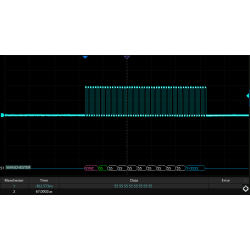
Many Siglent series support serial trigger and decode options. Available protocols vary by model and may include common embedded, automotive, audio and aerospace buses.
Only when a compatible probe with suitable voltage, current, bandwidth, isolation and safety ratings is used. The oscilloscope input and standard passive probe must never be assumed suitable for high-energy or floating measurements.
 2-4 Weeks

 Pre-Order
 2-4 Weeks
 -13%
-13%

 Pre-Order
Pre-Order
Pre-Order



 Pre-Order
Pre-Order
Pre-Order
 Pre-Order
Pre-Order
Pre-Order
 Pre-Order
 Pre-Order
Pre-Order
Pre-Order
 Pre-Order
Pre-Order
Pre-Order
 Pre-Order
Pre-Order
Pre-Order
Pre-Order
Pre-Order
 Pre-Order
Pre-Order
Pre-Order
 Pre-Order
Pre-Order
Pre-Order
Pre-Order
Pre-Order
Pre-Order
Pre-Order
Pre-Order
Pre-Order